
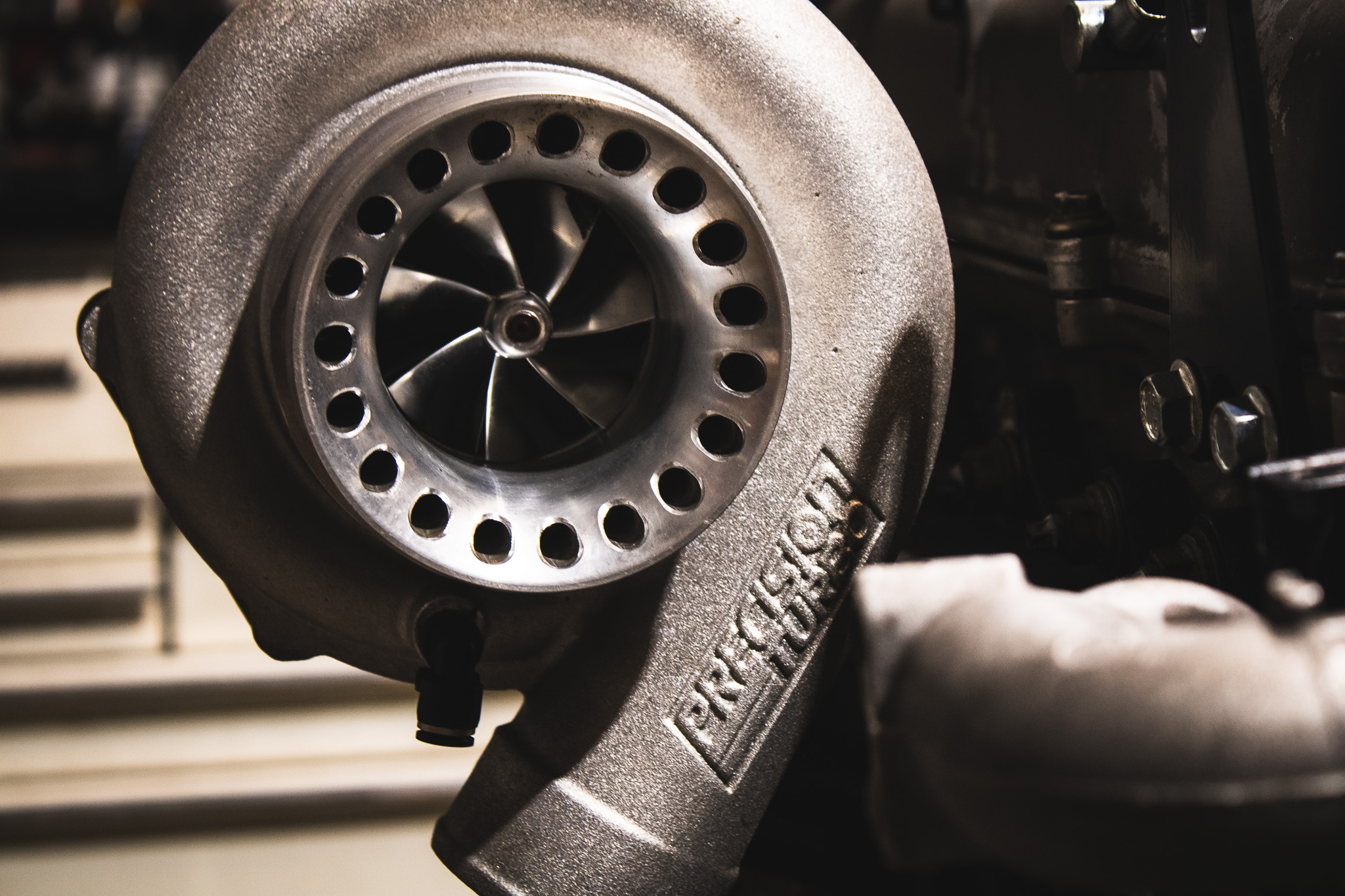
Turbo kits get sold on horsepower numbers, and horsepower numbers are the easiest thing to fake with a big enough compressor and an optimistic dyno chart. The number on the box tells you almost nothing about whether a kit is actually a good fit for your car and how you drive it.
Manifold design matters more than most buyers realize. A cheap cast manifold with poor flow characteristics can hold back a turbo that’s otherwise capable, and a log-style manifold built for a quick sale flows very differently than one designed around the specific engine and turbo pairing. This is one of the first things worth asking about, and one of the easiest things for a kit to cut corners on.
Fueling is next. A turbo kit adds air. Air without matched fuel delivery is either a tune that’s left conservative to stay safe, or a car that’s running dangerously lean under boost. Injector sizing, fuel pump capacity, and the fuel system as a whole need to be part of the conversation before the turbo goes on, not an afterthought once boost is already making power the fuel system can’t support.
Tune-ability is the piece that gets skipped most often. A kit is only as good as the tune behind it, and a tune is only as good as the platform’s support for real-time adjustment and logging. A turbo kit paired with a tuning solution that can’t be properly dialed in for your specific car, fuel, and goals is a kit that will always leave power and reliability on the table.
The honest version of “what turbo kit should I buy” is closer to “what’s the right turbo kit for this specific car, this specific goal, and this specific budget for supporting parts.” That’s a conversation worth having before any parts get ordered, not after a box shows up that doesn’t fit the plan.
Leave a Reply